













Sleeping facing north has not been established as a cause of poor sleep. Vastu Shastra often discourages it, but research has not established a best compass direction for everyone. For practical sleep support, start with a dark, quiet, comfortable room and a consistent routine.
If you have ever wondered whether your bed is pointing the wrong way, the advice can get confusing quickly. Some traditions recommend south. Others consider the room's layout or directions personal to you. Meanwhile, your bedroom may have exactly one wall that fits a bed.
Here is how to make sense of the traditions and the research, without adding another rule to bedtime.
Key takeaways
- Vastu often advises against sleeping with your head toward the north.
- Research on sleep direction is limited and does not establish a universal best direction.
- Darkness, quiet, comfort, and a regular schedule are practical places to start.

Is sleeping facing north bad for you?
There is not enough reliable evidence to conclude that sleeping with your head toward the north is inherently bad for you. Research exists, but it does not justify treating a north-facing bed as a health hazard.
The useful distinction is between a traditional recommendation and an established sleep guideline. A direction can hold cultural or personal meaning without being a medical requirement.
If your current layout feels comfortable and you sleep well, there is no established sleep-health reason to rearrange the room solely to avoid north.
Where the belief comes from: Vastu and Feng Shui
Vastu Shastra is an Indian architectural tradition concerned with how living spaces are arranged. In its Maharishi Vastu form, traditional sleep recommendations favor the head toward east or south and advise against north. These are principles within that tradition, rather than established clinical guidance.
Some modern explanations connect the rule to Earth's magnetic field, suggesting that the body and the planet interact like two magnets. That explanation should be distinguished from a demonstrated mechanism showing that north-facing sleep causes harm.
Feng Shui is a separate Chinese tradition, and its bedroom advice is not interchangeable with Vastu. The International Feng Shui Guild describes the command position: placing the bed so you can see the door without being directly in line with it, with the headboard against a solid wall. Some approaches also consider personal favorable directions.
Both traditions give people ways to think about their surroundings. Their recommendations do not all reduce to the same rule about north.
Which direction should you sleep in, scientifically?
Research has not established one best compass direction for everyone's sleep. There are interesting findings, but they need more context than a simple instruction to point your pillow south.
A 2019 study of 21 participants compared two naps in rooms with different bed orientations. Researchers reported differences in sleep-related brain activity and longer average sleep in the north–south orientation than in the east–west orientation. A small nap study, however, cannot tell us which direction everyone should choose for a full night's sleep or establish that having your head toward north is harmful.
For everyday guidance, the National Heart, Lung, and Blood Institute recommends a regular sleep schedule and a quiet, cool, dark bedroom. That gives you a more useful starting point than a universal compass rule.
| Question | Traditional guidance | What the evidence supports |
|---|---|---|
| Should your head point north? | Often discouraged in Vastu | Not established as inherently harmful |
| Is south or east best? | Favored in Maharishi Vastu | No universal best compass direction established |
| How should you arrange the bed? | Feng Shui may emphasize the command position and personal directions | Choose a practical layout that supports a comfortable sleep environment |
| What can you try first? | Direction and arrangement may hold meaning | A dark, quiet, cool room and a consistent schedule |

Head toward north vs. bed facing north
For this article, “sleeping facing north” means lying with the top of your head pointing north and your feet pointing south. It does not mean turning your face north while sleeping on your side.
A headboard against a north wall usually creates that head-to-north position. Simply having a bed somewhere on the north side of a room does not tell you which way your head points.
There is also a difference between geographic north and magnetic north. NOAA explains magnetic declination as the angle between them, which varies by location and over time. This helps clarify what a direction measurement means; it does not establish a sleep benefit for either reference point.
Traditional best directions for sleep
If you want to follow Vastu, east or south are commonly recommended alternatives. In the Maharishi Vastu account, east is associated with enlightenment and south with longevity. These associations describe the tradition, rather than proven health outcomes.
You can choose a direction that feels meaningful to you when your room allows it. A comfortable, workable bedroom does not need to satisfy every piece of advice you encounter.
What to focus on for a more restful bedroom
A room does not have to be perfect to support rest. Start with the thing you notice most: light slipping around the curtains, street noise, an overly warm room, or a bedtime that keeps moving.
Make room for darkness
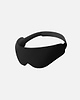
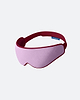
The CDC's sleep-environment guidance recommends darkening the bedroom and suggests an eye mask when other light-blocking measures are not enough.
Try closing gaps in the curtains or covering unnecessary indicator lights. If you cannot control the room's light, a blackout eye mask can make darkness easier to bring with you.

Reduce noise where you can
A quieter room is another part of the CDC's recommended sleep environment. Closing a window or moving a noisy device may help make the space more comfortable. When the sound comes from outside your control, Orbit reusable sleep earplugs offer an option for reducing noise.
Keep the room comfortably cool
The same guidance recommends a cool, comfortable sleep environment. Adjust bedding, ventilation, or the thermostat to find a setup that feels right for you. This is about feeling comfortable enough to settle in, without making temperature another nightly calculation.
Give your routine some consistency
Going to bed and waking up at similar times each day is part of NHLBI's healthy sleep guidance. A quiet wind-down can also give the evening a gentler pace.
For more on building that rhythm, explore why sleep matters and habits that help you keep your internal clock on time.
Frequently asked questions
Can you sleep facing north?
Yes. Current evidence does not establish sleeping with your head toward north as inherently harmful. Vastu may discourage the direction, so your choice can also reflect your beliefs and the space available.
Which direction is not good to sleep in?
Vastu often discourages sleeping with your head toward north. Scientific evidence does not establish a compass direction that everyone should avoid for healthy sleep.
Which direction should your bed face?
There is no scientifically established best compass direction for everyone's bed. Choose a layout that works for your room and helps you create a comfortable sleep environment. Traditional preferences can guide the choice if they matter to you.
Does the direction you sleep matter in the Southern Hemisphere?
There is not enough evidence to recommend a separate sleep-direction rule for the Southern Hemisphere. A change of hemisphere does not provide a proven reason to reverse your bed's orientation.
Is sleep direction the same as sleeping position?
No. Sleep direction describes your orientation on a compass; sleeping position describes whether you lie on your side, back, or stomach. This article addresses compass direction, rather than advice for individual medical conditions.
A little less pressure at bedtime
If a particular direction helps your bedroom feel right, there is room for that preference. If your bed fits comfortably in one place, there is room for that reality, too.
For your next small change, start with something you can notice: less light, less noise, or a little more time to wind down. Rest does not need another rule to follow.
This article distinguishes traditional beliefs from scientific findings and provides general information, not individual medical advice. If sleep problems persist, speak with a healthcare professional.